Why the wrong furniture fails in 18 months in Ahmedabad
Ahmedabad has a three-season problem that most furniture catalogues don’t account for. April through June, indoor temperatures touch 38–42°C even with the AC on the lower setting. July through September, monsoon humidity hits 70–85%; in low-floor apartments, condensation pools on wooden surfaces overnight. November through February, fine dust settles into every fabric weave — the Gujarati “dhuradhul” that the city quietly fights with brooms and damp cloths.
Furniture built for Bangalore or Mumbai — gentler climates, narrower temperature range, less dust — fails predictably here. We’ve serviced enough pieces over 12 years to know what fails first. PU foam compresses 30% within two summers; you sit on it and feel the wood frame underneath. MDF doors on monsoon-facing walls warp and stop closing flush. Velvet collects dust that no vacuum will lift, and the cleaning team you eventually hire scrapes it off with a wire brush. Cheap nail-gunned sofa frames creak by month 12. Cheap leather peels along the seat front by year three.
None of this is mysterious. The materials and joinery decisions that prevent each failure are well-understood. The reason most furniture in this market fails anyway is that buyers don’t know which questions translate to which long-term outcome — so they pay for finish (the part they can see) and skip the engineering (the part that breaks). The category notes below are arranged around the failure mode for each piece type and what you can verify on the showroom floor to avoid it.
Sofas: what works, what fails
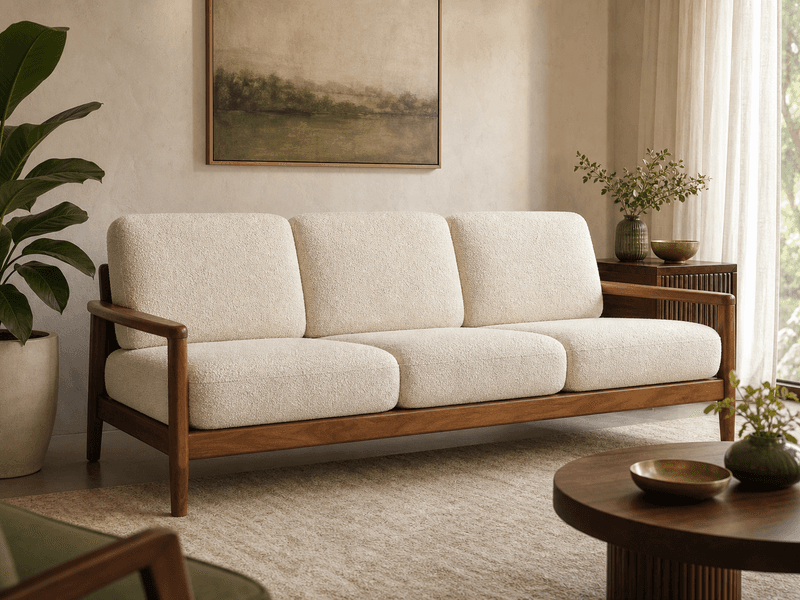
The two failure modes for a sofa in Ahmedabad are the cushion (which compresses) and the frame (which creaks). Both are preventable.
What to look for: CMHR-certified three-density foam — a firm base layer, a medium core, a soft top. Kiln-dried hardwood frame (teak, sheesham, or solid engineered hardwood — not chip-board, not soft pine). Mortise-and-tenon or dovetail-cornered joints; no visible nail heads in any structural junction. Fabric weight 350 gsm or higher for upholstery; 400+ for high-traffic rooms.
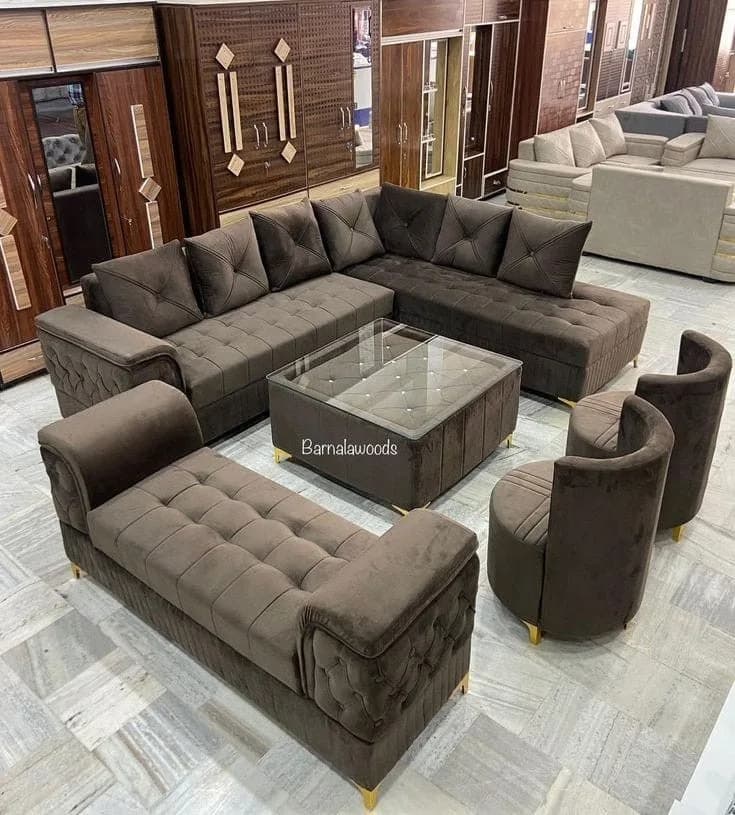
What to avoid: “PU foam” without a grade specified. Velvet in any household with people who eat on sofas. Sub-300 gsm fabric, which thins visibly in 18 months. Frame designs you can’t see, with no half-built sample to inspect.
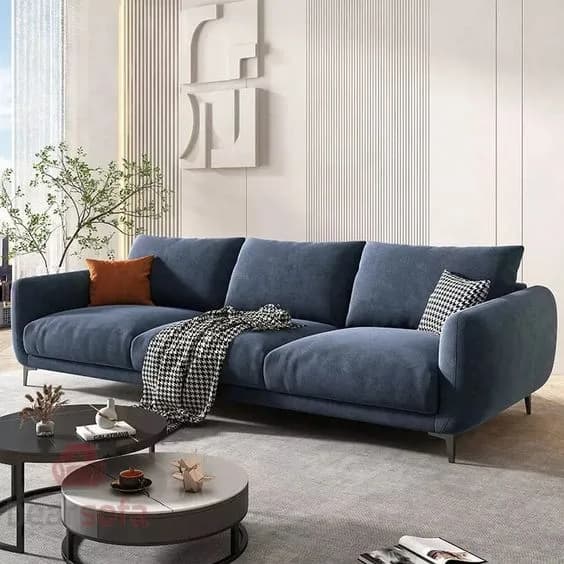
From our catalogue: the 3-Seater Sofa in boucle pairs solid teak with a 350 gsm boucle, well-suited to the climate. The L-Sectional Sofa uses Italian top-grain leather over a walnut-accented frame — built for households where the sofa is the family’s primary sitting surface.
Beds: what works, what fails
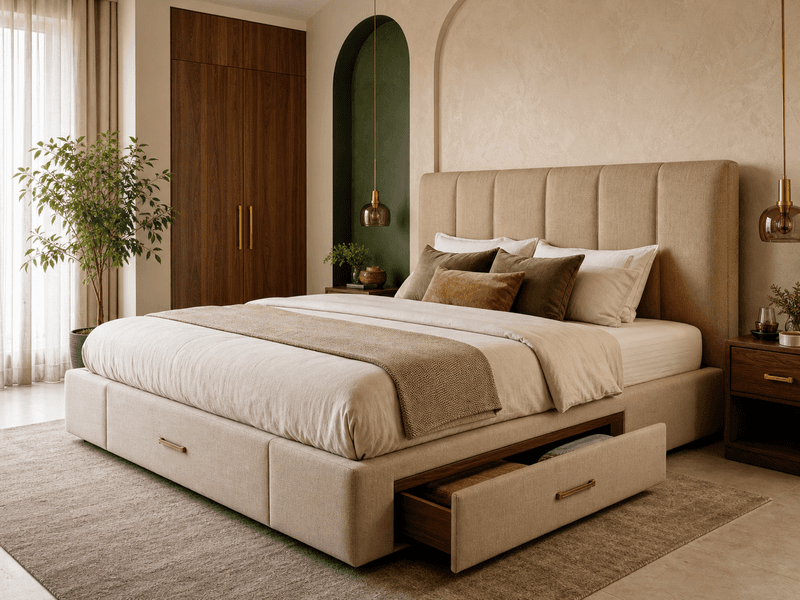
Bed failures in Ahmedabad split into two: storage drawers that warp shut in monsoon, and headboards that peel where the upholstery glue separates in heat.
What to look for: Engineered wood with PU-edge banding for storage beds (the banding is what stops moisture-driven warping). Soft-close drawer slides rated for ≥25kg dynamic load. Upholstered headboards with mechanical (not glued) fabric attachment. For premium pieces, solid hardwood frame; for value, engineered hardwood with visible edge-band on every cut.
What to avoid: Bare-edge MDF storage drawers; chip-board headboards with stapled-on upholstery; beds that flex in the middle when you sit on the foot rail.
From our catalogue: the King Storage Bed uses edge-banded engineered wood for storage drawers, an upholstered headboard with mechanical attachment, and a 5-year frame warranty against warping.
Dining: what works, what fails
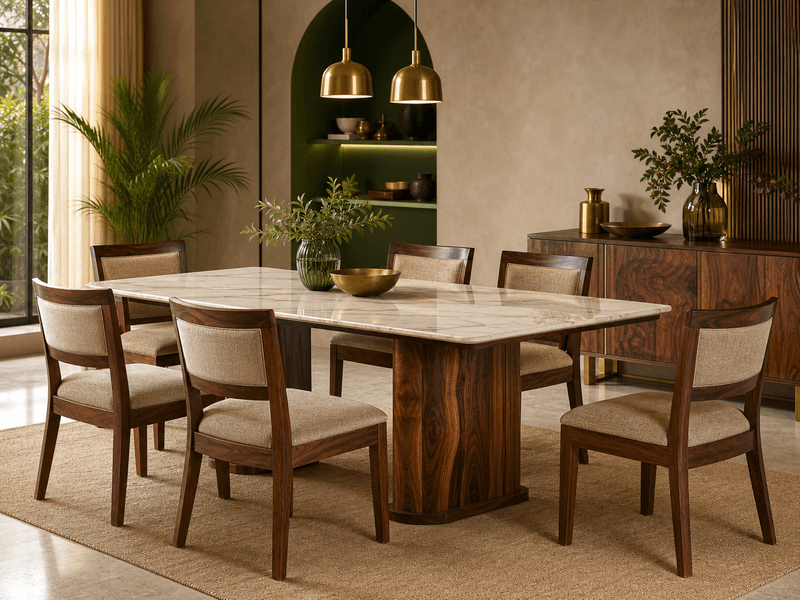
The single most common dining-table failure in Ahmedabad is sag — a plywood or thin engineered-wood top under hot vessels develops a slight bow within 18 months, visible when you set a glass at one end. The fix is either solid hardwood (heavy, expensive) or a stone top on a wooden base (lighter, surprisingly affordable).
What to look for: Solid hardwood tops on 4-seaters; marble or travertine tops on 6+ seaters (the longer the table, the more the sag problem). For chairs: solid wood frames, joint-pinned (not glued-only) seat construction. For dining sideboards: soft-close drawer slides, dovetailed drawer construction.
What to avoid: 6-seater dining tables with veneered plywood tops. They’ll look beautiful in the showroom and sag in your home within a year. Glass-only tops in homes with small children (every Ahmedabad household with a toddler has a glass-top horror story).
From our catalogue: the Dining Set 6 uses a 25mm marble top on a solid sheesham base — survives chai, turmeric, Gujarati cooking oil and the occasional dropped serving bowl. The Sideboard uses mango wood with brass inlay and dovetailed drawer construction.
Wardrobes and storage: what works, what fails
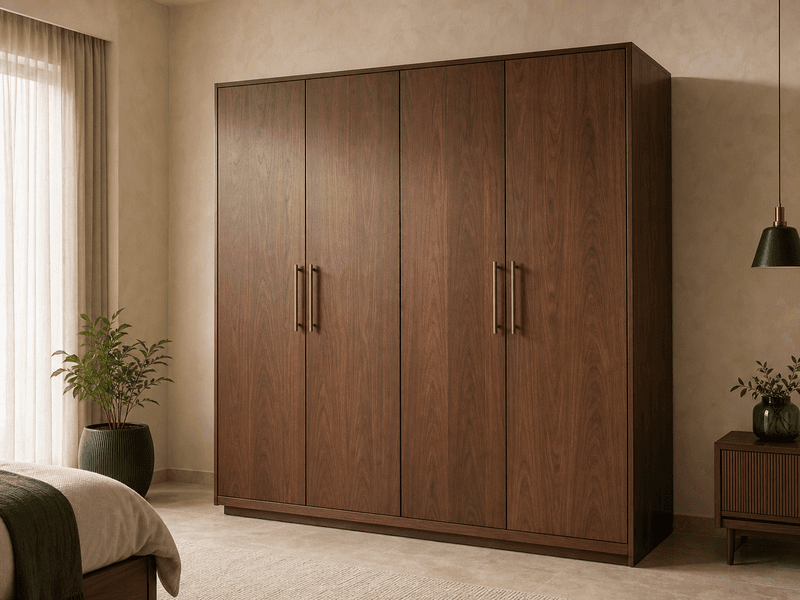
Wardrobe failure modes are subtle but expensive. The doors don’t close flush after a couple of monsoons because the bottom edges have absorbed moisture. The hinges loosen because they were screwed into chip-board with too-short screws. The drawer-internal edges absorb fabric softener residue and start smelling.
What to look for: Engineered wood with PU-edge banding on every visible and invisible cut. Soft-close hinges rated for ≥80,000 open-close cycles (that’s about 20 years at 10 opens/day). Wardrobe interior shelves with sealed edges, not just laminate-faced cuts.
What to avoid: Wardrobes where the inside edges of the drawers are bare. Lift one drawer in any wardrobe you’re considering — if the cut edges are unfinished MDF, walk away.
From our catalogue: the 4-Door Wardrobe uses engineered wood with full edge-banding, soft-close hinges, and sealed-edge drawer interiors. Inspect the drawers in the showroom — that’s the test.
What good furniture costs in Ahmedabad
Real ranges, not marketing tiers. Sofas at the value end (CMHR foam, kiln-dried hardwood frame, decent fabric, 5-year warranty): ₹35,000–₹55,000 for a 3-seater. At the premium end (top-grain leather, hand-stitched, mortise-tenon frame, marble or walnut accents): ₹65,000–₹1,20,000 for a 3-seater. Below ₹25,000, the foam grade, frame, or both have been cut. Above ₹1,50,000 for a non-imported sofa, you’re paying for brand or designer name, not materials.
Dining sets: 6-seater with solid wood or marble top and four hardwood chairs runs ₹45,000–₹85,000 for genuinely good pieces. Below ₹30,000 you’re in sag-territory plywood. Beds: ₹35,000–₹60,000 for a quality king storage bed with soft-close slides and a proper headboard. Wardrobes: ₹30,000–₹70,000 for a 4-door with edge-banded engineered wood and soft-close hinges.
Add 25–40% for full custom — bespoke dimensions, your fabric, your finish. See our custom furniture guide for the 7-step process and lead times.
The 5-year warranty test
Every furniture seller in Ahmedabad advertises a warranty. The test isn’t the number of years on the banner — it’s what the warranty actually covers. Read the fine print before you buy. A 5-year frame warranty should cover joint separation, frame splitting, and structural failure with no service charge. It should not require “sole-original-owner” clauses, written claims within 48 hours, or factory-return shipping at your expense. Our 5-year frame warranty covers everything structural, with lifetime servicing — a 72-hour visit to your home anywhere in Gujarat for the life of the piece. If you want to compare warranty terms, ask each seller for the warranty card before purchase.
How to use this guide
The categories above describe what fails and what to look for. The next step is either a visit (Mon–Sun, 10am–9pm at our Narol showroom) or an enquiry — WhatsApp +91 63558 76811 or email [email protected] with the category, rough budget, and room dimensions. If you’d like to research more before buying, our journal covers sofa foam grades, teak species, and monsoon furniture care in more depth.